


 | Published: June 10, 2026 | Updated: June 10, 2026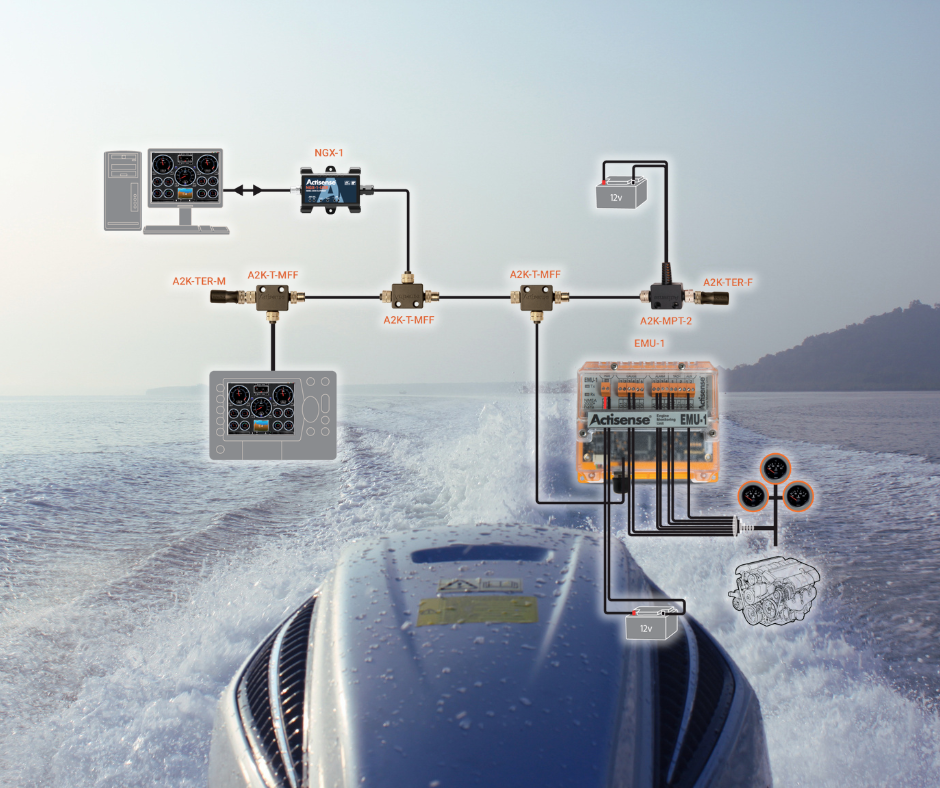
TL;DR: If your boat has analogue engines but a modern NMEA 2000 network, your MFD is capable of displaying live engine data – it just can’t get to it. The Actisense EMU-1 fixes this by connecting to your existing senders and gauges and converting their signals into NMEA 2000 data, no engine swap required. One unit can cover up to two engines and bring engine temperature, oil pressure, RPM, fluid levels, alarms and more onto your display.
You’ve invested in a modern NMEA 2000 network. GPS, AIS, a multifunction display capable of showing real-time engine data, such as engine temperature, oil pressure, RPM, fuel levels, all right there on screen. There’s just one problem: your engines are analogue, and they have no idea any of that exists.
It’s a frustration felt by countless boat owners. The MFD is ready and waiting, but the engines, perfectly good, perfectly reliable diesel units, speak a different language. The data is all there in the gauges on the dashboard; it just can’t get to the screen where it would actually be useful.
The expensive answer is to pull the engines and replace them with newer, digitally-harnessed units. That’s rarely a conversation anyone wants to have. The practical answer is the Actisense EMU-1 Engine Monitoring Unit.
The real problem: a digital network, analogue engines
Modern MFDs have changed what boat owners expect. When you can see chart overlays, AIS targets, and weather data all in one place, it’s natural to want your engine parameters there too — especially on longer passages, where keeping an eye on temperature, oil pressure, and RPM can be the difference between a smooth trip and an unplanned stop.
The trouble is that engine digitisation is still catching up with the rest of the marine electronics world. Many vessels, including twin-diesel workhorses that have years of reliable service left in them, run senders and gauges that predate NMEA 2000 entirely. Retrofitting a full digital harness to an existing engine is often impractical or prohibitively expensive.
Meanwhile, that engine data sits locked in analogue signals that your MFD can’t read. You’re left watching the old gauges and mentally cross-referencing what you see, rather than having everything integrated in one place.
The solution: converting analogue signals into NMEA 2000 data
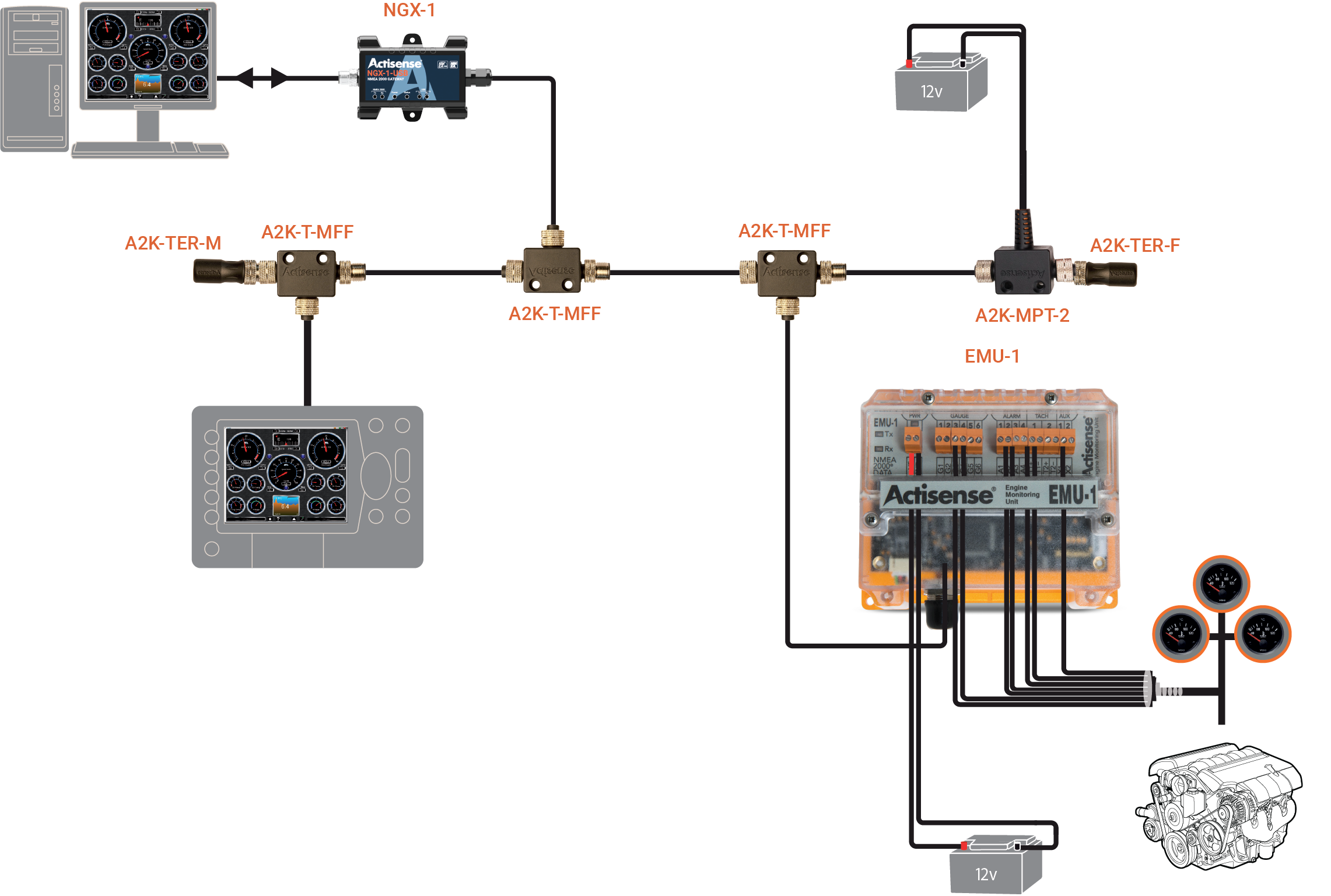
The Actisense EMU-1 is an analogue-to-NMEA 2000 unit that bridges exactly this gap. It connects directly to your existing engine senders and gauges, reads the analogue signals they already produce, and converts them into NMEA 2000 data, meaning your MFD, chartplotter or any other NMEA 2000 display device can see your engine.
No engine swap. No new harness. The senders you already have become the source of the digital data you’ve been missing.
As our CEO, Phil Whitehurst, puts it:
“The whole point of the EMU-1 is to make information from gauges much more valuable and useful. Once you’ve digitised those signals, you can view the data right on your boat’s MFD, and also export the data for further analysis. This leads to a much clearer picture about the state of your engine’s usage, meaning that maintenance decisions can be made more easily, and fuel efficiency can be optimised.”
What it can monitor
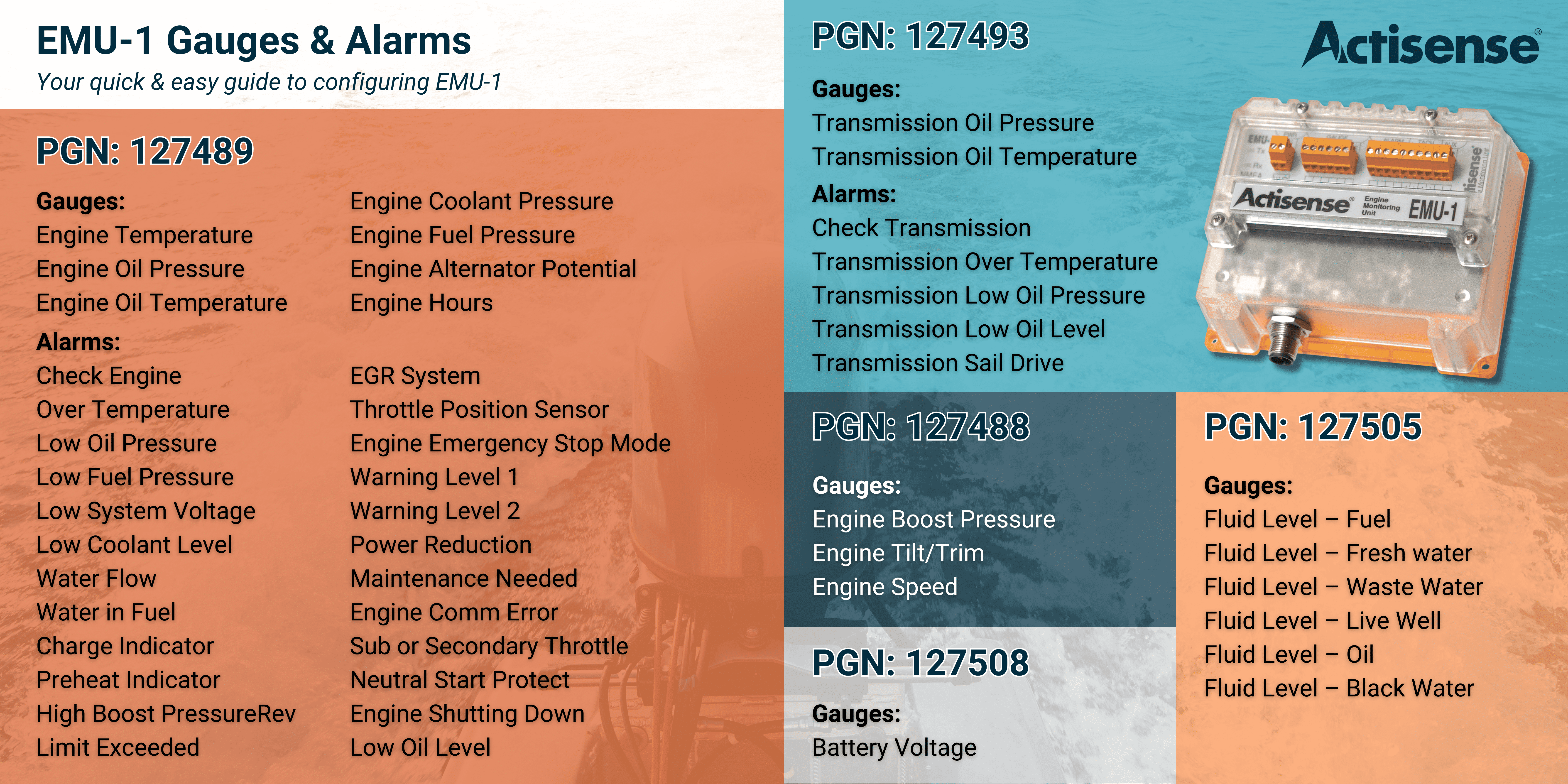
A single EMU-1 provides 14 analogue inputs — six gauge/parameter inputs, four alarm inputs, two tacho (RPM) inputs and two auxiliary inputs and can support up to two engines from one unit (provided they share a common ground).
The parameters it can bring onto your NMEA 2000 network include:
- Engine vitals: engine temperature, oil pressure, oil temperature, coolant pressure, fuel pressure
- Performance data: boost pressure, tilt/trim, engine speed (RPM)
- Fluid levels: fuel, fresh water, waste water, live well, oil, black water
- Transmission: oil pressure and temperature
- Alarms: over temperature, low oil pressure, low fuel pressure, water in fuel, rev limit exceeded, and many more
- Engine hours: logged automatically via the tacho input, stored in non-volatile memory
- Battery voltage: reportable as battery voltage or alternator potential
All of this is output as standard NMEA 2000 PGNs, meaning it will be understood by any certified NMEA 2000 display device without any special configuration on the MFD side.
A word on compatibility: it’s about the senders, not the engine
One important point: compatibility depends on your senders and gauges, not the engine make or model. It’s common for two otherwise identical engines to run different senders, so identifying the gauge manufacturer (VDO, Faria, Yanmar, US Marine and others are all supported) is the right starting point. Read this article for more on how to check compatibility.
For setups outside the standard library, a Custom Gauge Manager is available to handle less common configurations.
Easy to install, easy to configure
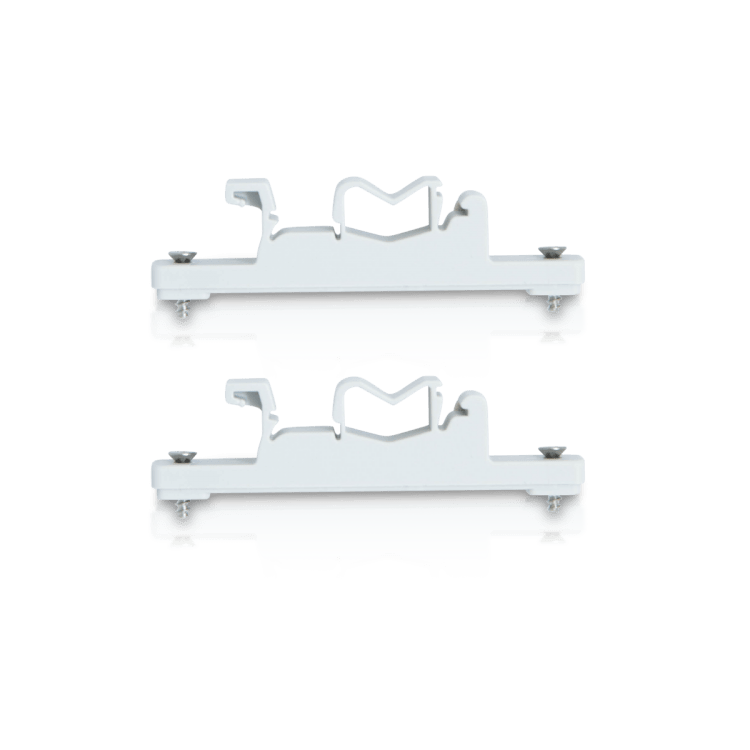
The EMU-1 connects via pluggable screw terminals and mounts with four stainless-steel bulkhead screws (a DIN rail kit is also available). It runs on 9–35V DC, covering both 12V and 24V systems.
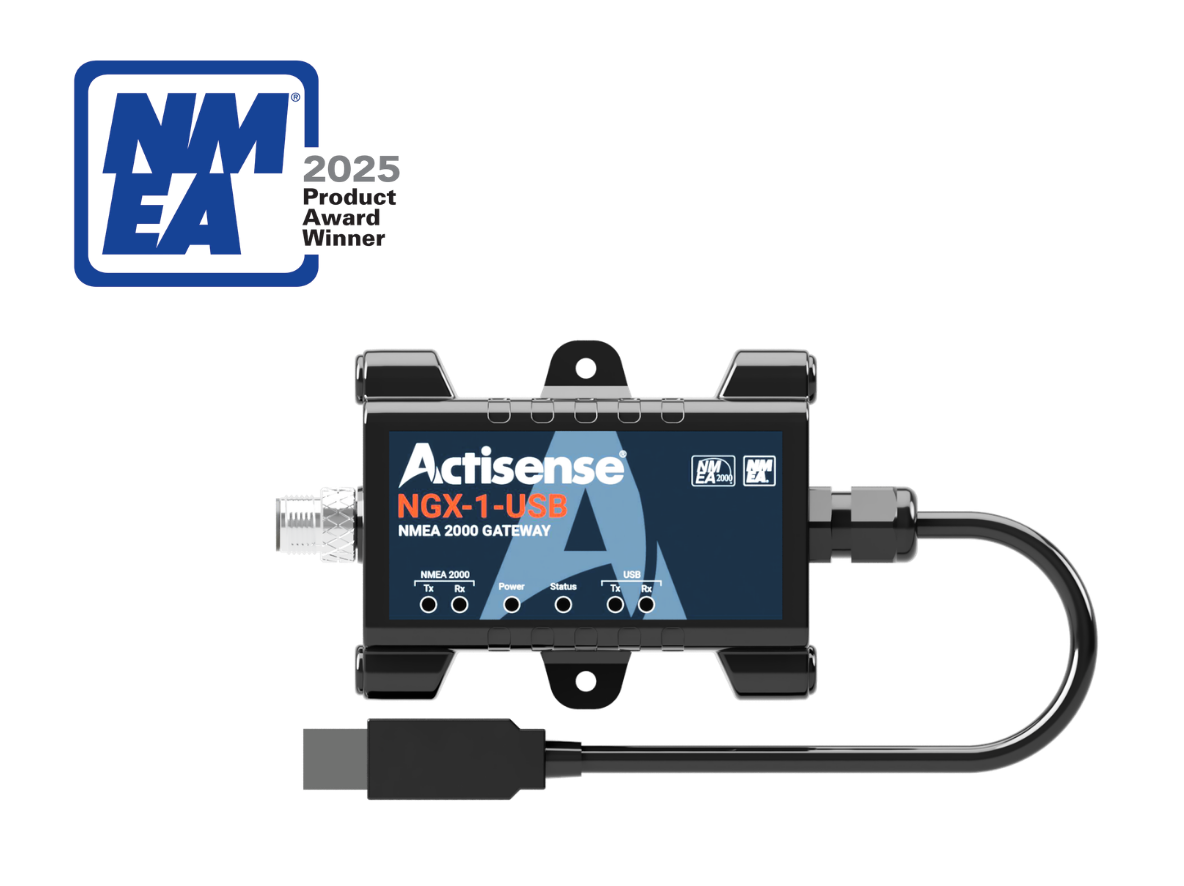
Configuration is handled through the free Actisense Toolkit on a PC, using an Actisense NGX-1 gateway as the PC-to-NMEA 2000 interface. This is what makes the unit genuinely flexible: the settings can be tuned to match your specific senders, rather than relying on a one-size-fits-all approach. Firmware updates are delivered over the NMEA 2000 network, and existing owners receive new features, including tilt and trim support added in 2024, as free upgrades.
The bottom line
If you’ve been watching your NMEA 2000 MFD sit idle on engine data because your engines are analogue, the EMU-1 is the most cost-effective way to close that gap. It doesn’t ask you to replace anything that’s working. It simply makes what you already have speak the language your network understands.
 Breathing digital life into your analogue gauges: The basics of your EMU-1 Engine Monitoring Unit