


 | Published: August 26, 2021 | Updated: July 23, 2026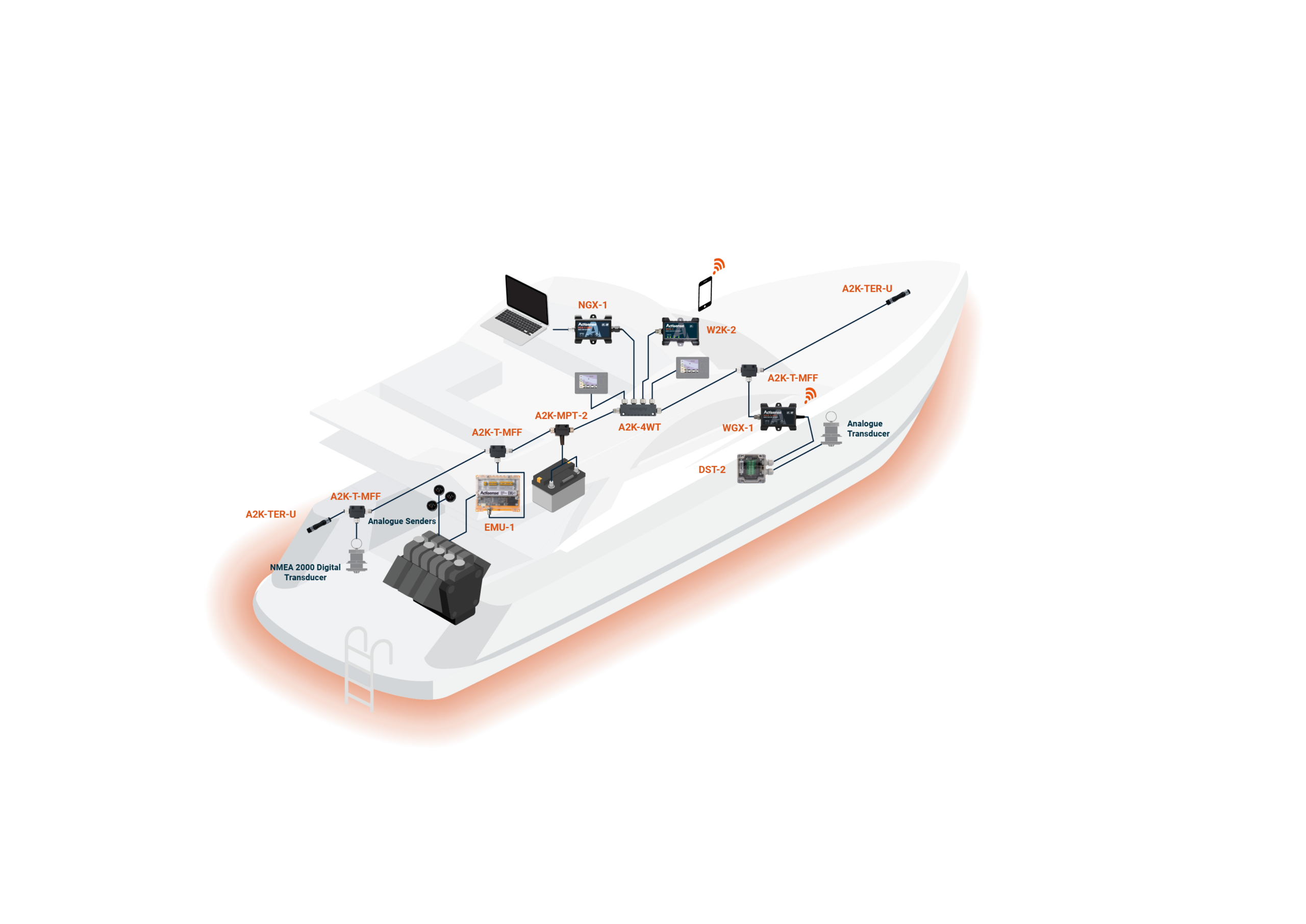
Background
Who are the NMEA?
NMEA stands for the National Marine Electronics Association. In a nutshell, they’re a not-for-profit (NFP) organisation whose mission is to improve data communications between marine electronics manufacturers. Read more at www.nmea.org
What is NMEA 2000?
NMEA 2000 is an open standard created by the NMEA to support that mission. It standardises the messages and the connector system used by devices in the marine industry. There is a common misconception that ‘open standard’ means freely available. In fact it means the standard can be bought at a reasonable cost from the NMEA website. It is worth remembering that the NMEA is an NFP organisation, and these standards are an important source of income that allows it to continue operating.
For complete peace of mind when building your NMEA 2000 network, use NMEA 2000 certified devices. These devices meet all the NMEA requirements and have received full certification.
What are the advantages of NMEA 2000?
- Simple connections make an NMEA 2000 network easy to install.
- NMEA 2000 networks are reliable. They are self-configuring and need no setup, so you can easily add or remove compatible equipment without restarting the network.
- Unlike NMEA 0183, differing baud rates are not an issue on an NMEA 2000 network.
- An NMEA 2000 network can connect up to 50 different compatible devices.
- You do not have to replace your entire NMEA 0183 network when converting to NMEA 2000. You can connect to the new network while keeping your existing NMEA 0183 devices in place, using an NMEA 2000 Gateway such as the NGX-1.

Building an NMEA 2000 network
What are the minimum requirements for an NMEA 2000 network?
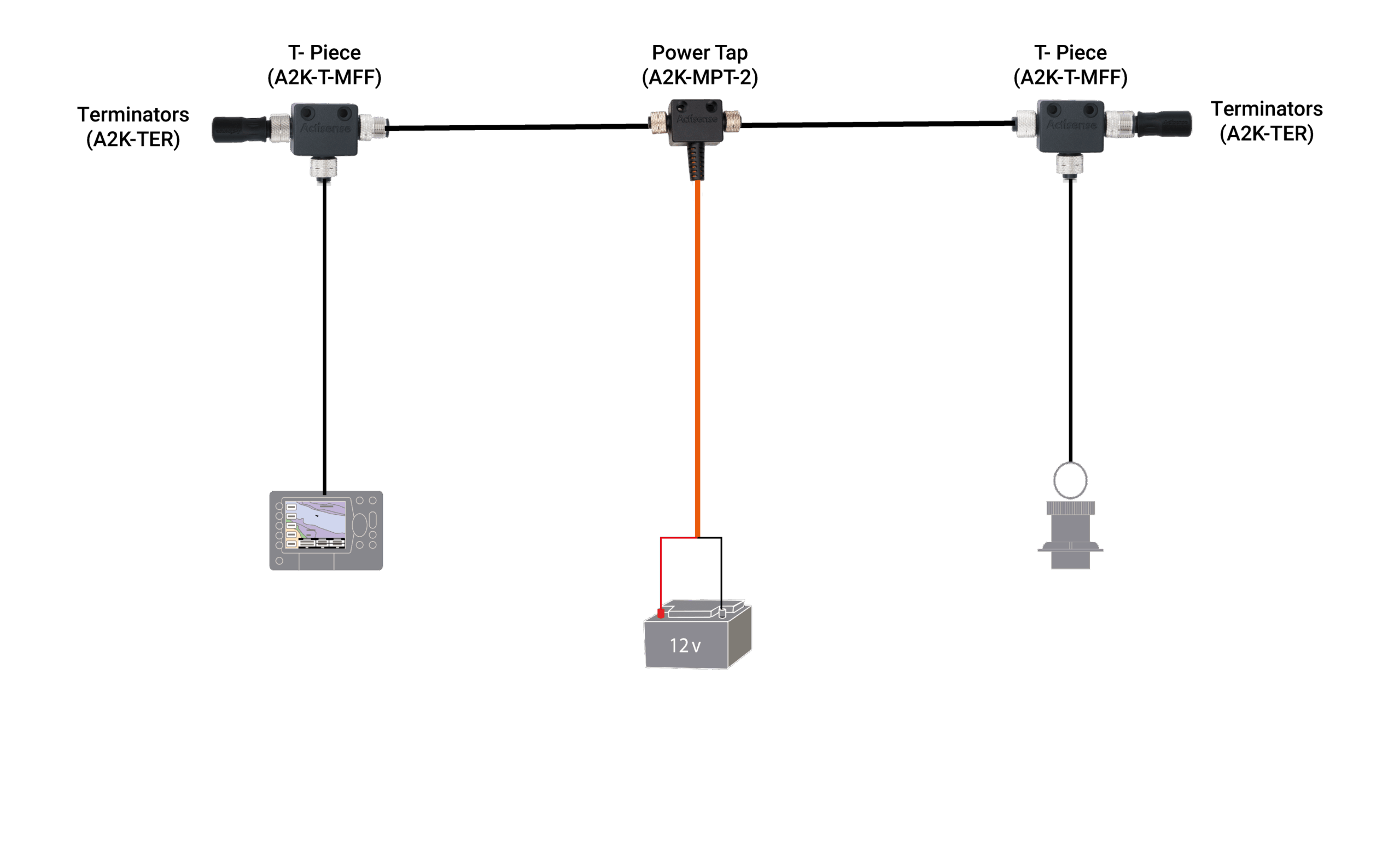
When building your NMEA 2000 network, there are some minimum requirements:
1. A fused power insertion point (for example, an Actisense A2K-MPT-2 connected to a fused battery supply)
2. Two NMEA 2000-certified devices, plus the cables and connectors needed to build the network
3. Two termination resistors
Where can I get an NMEA 2000 network?
- The Actisense Starter Kits provide everything you need to create a basic NMEA 2000 network from scratch.
- The Actisense Self-contained Boat Networks also provide a ‘plug and play’ network. Note, however, that SBN networks cannot be expanded.
- Actisense cables and connectors let you build a network to your own specification. They are durable and reliable, with metal bodies and nickel-plated brass contact pins for corrosion resistance and long-term reliability in marine environments.
Watch our video for a step-by-step guide to setting up a basic NMEA 2000 Network.
Physical Layer
The network connections (cabling, t-pieces and so on) make up what is known as the NMEA 2000 ‘Physical Layer’. The NMEA adopted this from the DeviceNet standard, a proven, robust network solution already in use in the automotive and agriculture industries, among others. DeviceNet defines cable sizes and wiring colours, which keeps NMEA 2000 networking simple, and its standard connectors allow quick and easy ‘plug & play’ networking.
Backbone
The main section of an NMEA 2000 network is known as the ‘backbone’. Every NMEA 2000 device connects to the backbone through a t-piece, a connection known as an ‘instrument drop’. Each end of the backbone must be correctly terminated with a 120 Ohm resistor. Because these resistors are connected in parallel, they provide 60 Ohms of termination resistance across the entire network.
Cable – What are the correct cable sizes for an NMEA 2000 network?
NMEA 2000 certified, DeviceNet standard cabling comes in three sizes: ‘micro’, ‘mid’ and ‘mini’.
- Micro – the smallest cable size used for NMEA 2000 networking. It can form the backbone on smaller installations, as well as instrument drops.
- Mid – an intermediate cable size that must only be used for the backbone. It is more suitable for larger NMEA 2000 installations.
- Mini – the largest cable size. Like mid, it must only be used for installing an NMEA 2000 backbone. A popular choice for larger NMEA 2000 installations.

The Actisense A2K range includes a choice of pre-manufactured micro cable lengths with over-moulded, waterproof (IP 67 when mated), gold-plated connectors.
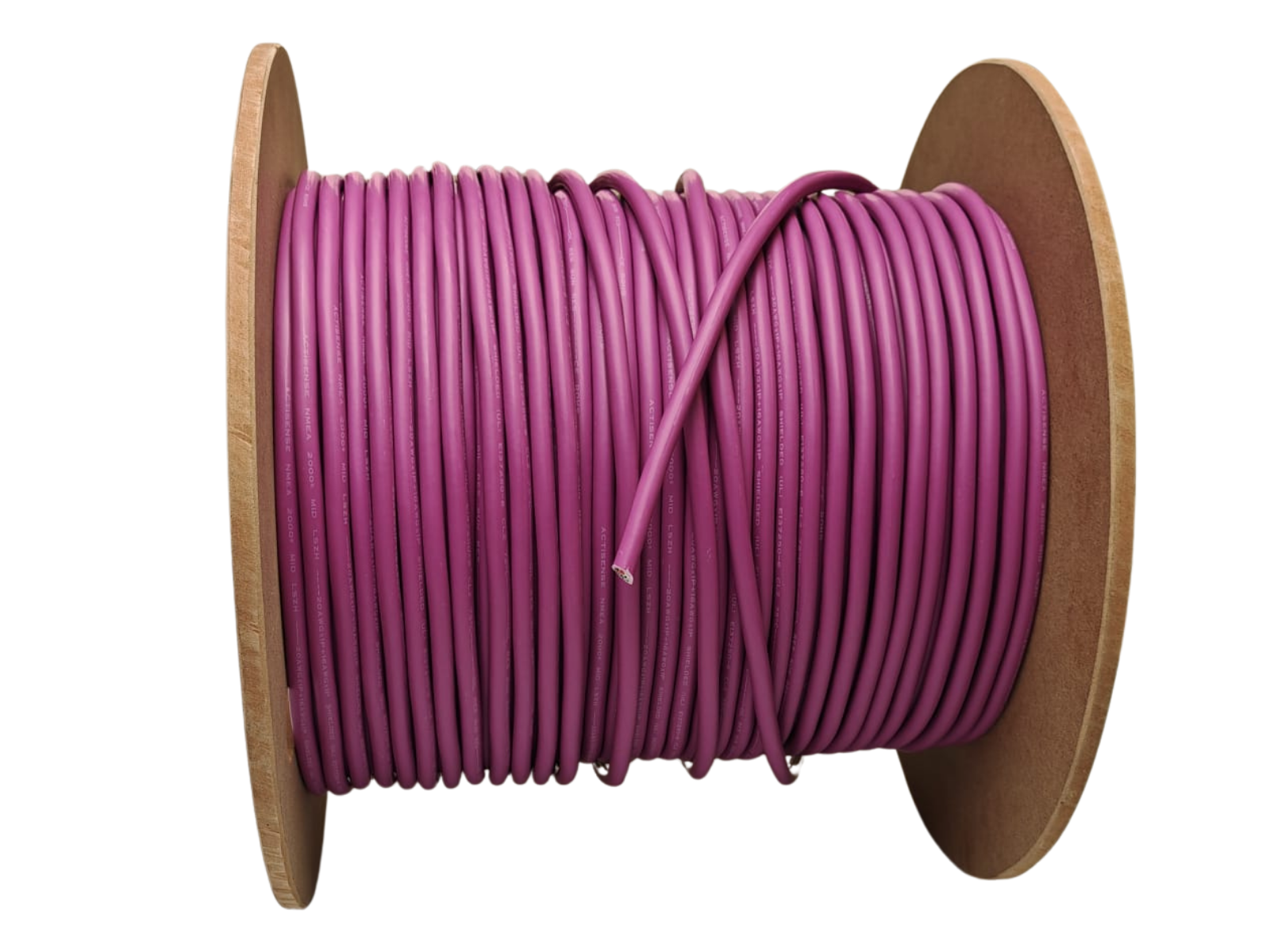
100-metre reels of bulk cable are also available, in both lite and LSZH mid. Combined with Actisense field fit connectors, these provide a complete solution for custom lengths of NMEA 2000 certified cable. Field fit connectors are explained in the “Connections” section.
The maximum backbone and instrument drop lengths for each cable type can be found in the “Network Limitations” section.
Connections – Are all NMEA 2000 connectors the same?
The DeviceNet standard allows simple ‘plug & play’ connectivity, with screw-type connectors that make installation quick and easy. The wiring connection for each pin is defined in the NMEA 2000 specification, so installation is consistent across every NMEA 2000 network. The diagrams below show the pre-defined NMEA 2000 pinouts as viewed from the rear.
 | |
As previously mentioned, devices connect to the NMEA 2000 network through an NMEA 2000 certified T-Piece. The Actisense A2K t-pieces (A2K-T-MFF) are designed so that a device can be connected easily even while the t-piece remains secured to a bulkhead. Their gold-plated screw connectors make Actisense t-pieces durable, so they should last the lifetime of any NMEA 2000 installation.
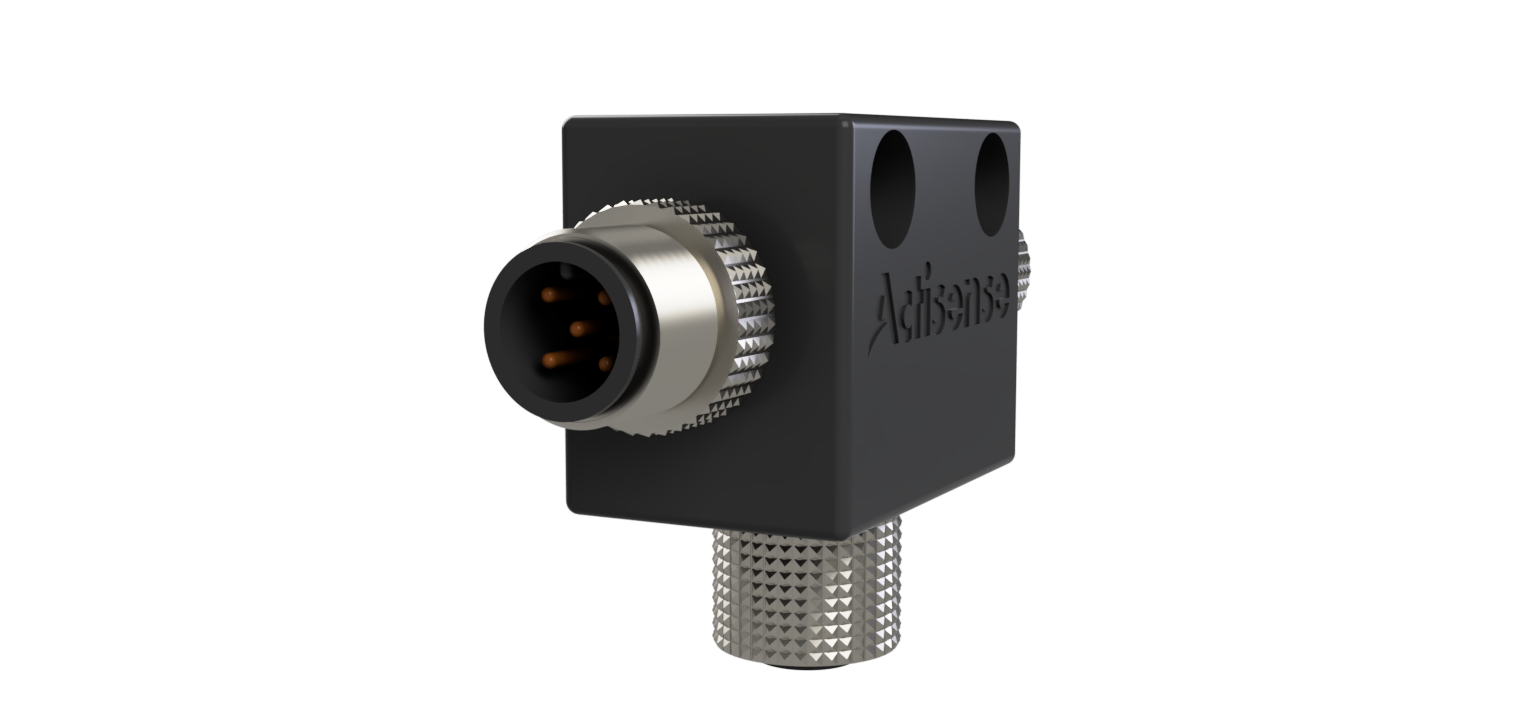
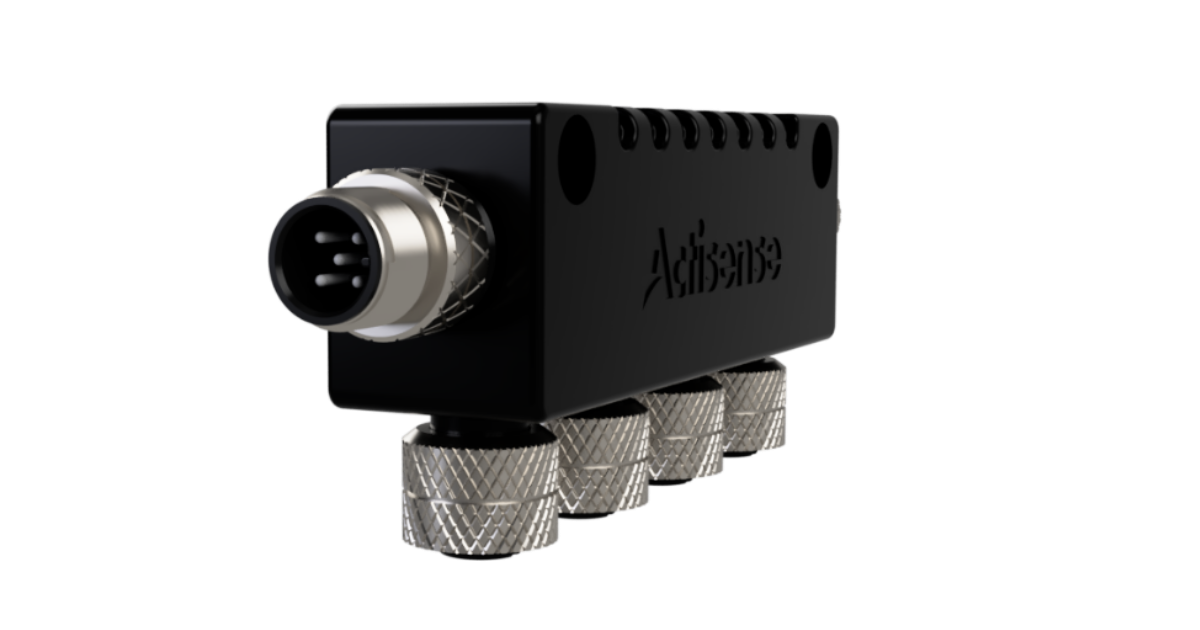
Where up to four device connections are needed in one place, the Actisense four-way t-piece (A2K-4WT) can dramatically reduce installation time compared with using four individual t-pieces.
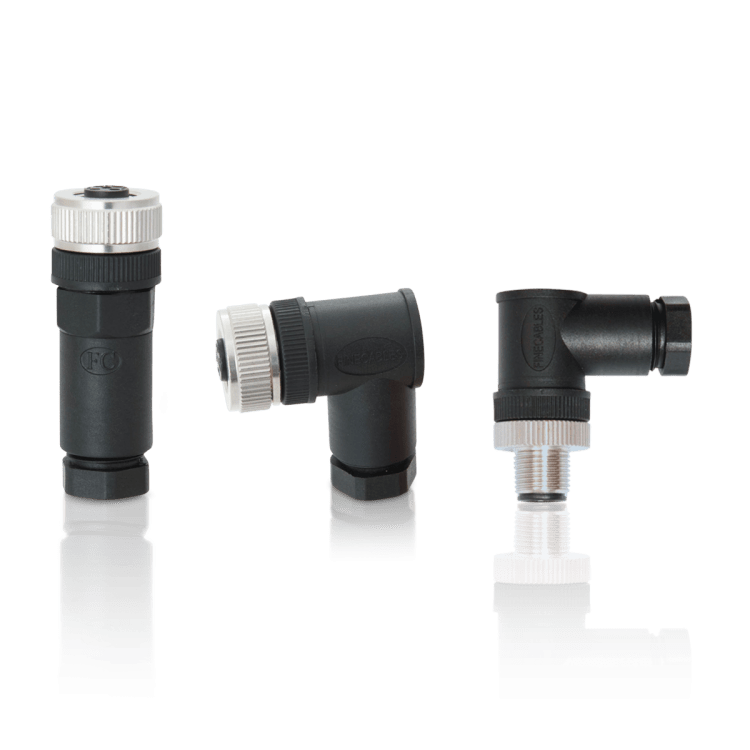
Actisense field fit connectors (A2K-FFC) are available in male and female versions, with a right-angled variant of each, ideal for installing NMEA 2000 cables in tight corners or around bends.
How to power an NMEA 2000 network
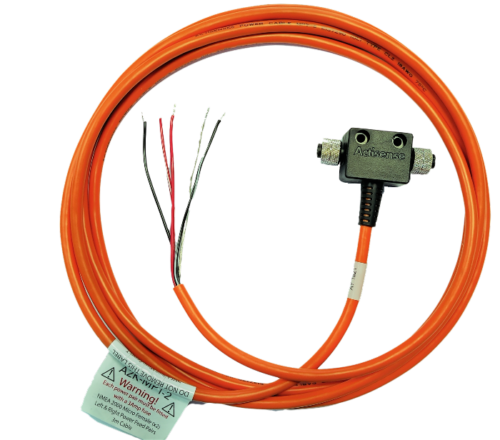
Power Insertion using A2K-MPT-2:
The Actisense Micro power T-piece has a twin pair of power wires, one for each side of the T-piece. Both pairs must be connected to a 12VDC (9-16) power supply so that the electrical load is distributed evenly.
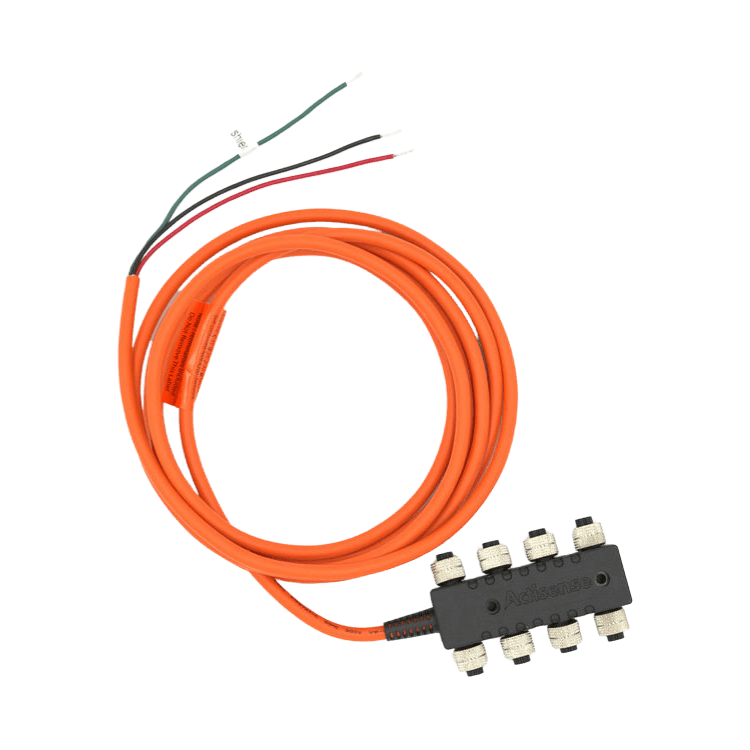
Power using A2K-SBN-2:
The power cord for the Self-contained Boat Network is over-moulded to the case of an 8-way T-piece to prevent water ingress. Once the pair of bare wires is connected to a power supply or battery, power is available to all ports.
Key terms
You will hear a few common terms when discussing NMEA 2000 networks. Here’s what they mean:
Backbone: The main trunk of cable that runs through the boat to form the network. T-pieces are connected along the network for devices to plug into.
Drop Cable: The length of cable that connects an NMEA 20000 device to the backbone. Under the NMEA 2000 standard, the maximum length for a drop cable is 6m.
PGN: Stands for ‘Parameter Group Number’. The messages used by NMEA 2000 devices for sharing information.
Testing & diagnostics
Testing Power Supply and Termination Resistors
Ideally, the power supplied to the network should be tested at two points: the insertion point and the extremities of the network.
Testing the insertion point shows how much power is actually being supplied to the network. Any device without its own external power supply draws power from the backbone, so there must be enough power to run all of the connected instruments.
The power should never exceed 16V or fall below 9V. Since connected devices consume some of the supplied power, and cable impedance also drops the voltage, it is important to confirm that the voltage at the end of each backbone leg is still adequate.
To check this, temporarily remove a termination resistor from the end of the network and use a voltmeter to measure across the NET-S and NET-C pins. The reading should be at least 9V.
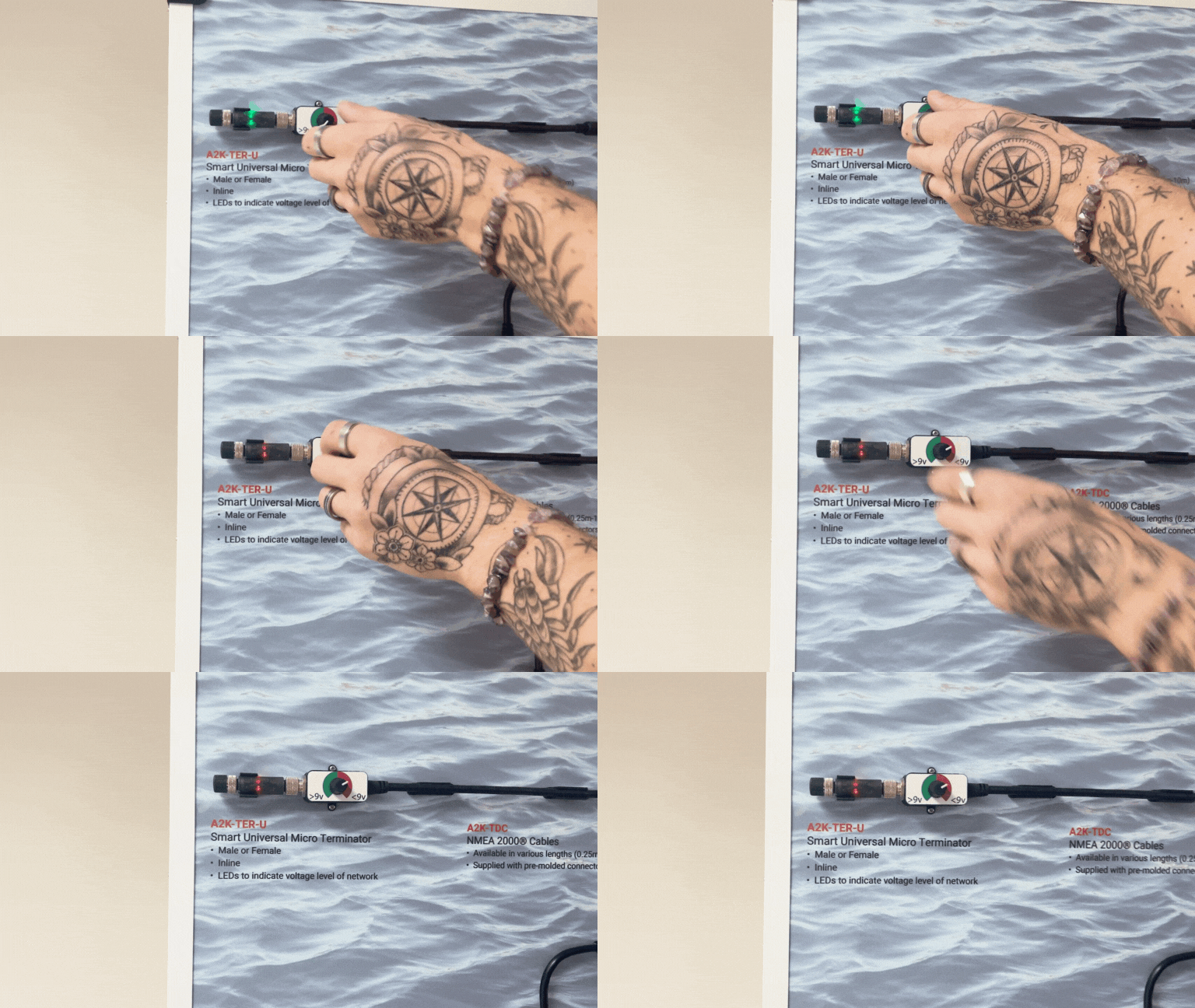
Alternatively, you can use Actisense’s A2K-TER-U Smart Terminators, which use an LED to indicate voltage. They perform the same role as any standard NMEA 2000 terminator but also include a red/green LED. When the network voltage is above 9V the LED is green, and when it is below 9V the LED is red. This is a quick and easy way to identify power supply issues on an NMEA 2000 network.
When testing the network resistance, the value expected is 60 Ohms. Power down the network and place a DMM across the NET-H and NT-L pins. A reading of 120 Ohms means only one termination resistor is installed, so a second resistor must be added at the opposite end of the network from the existing one.
A reading of 40 Ohms means three termination resistors are installed, so one must be removed. If it is not obvious where the third resistor is, check for any network devices that contain a built-in termination resistor and make sure they are switched off. Devices with built-in termination resistors do not achieve NMEA 2000 certification, as this practice can cause confusion on the network.
Further Testing
If the problem persists after you have confirmed that both the power supply and the termination resistance are good, further testing is required. A common technique is to split the network into sections by moving the terminator: disconnect one half of the backbone and move the termination resistor to the new, temporary end of the network.
If the issue remains, it lies in the half that is still powered and active. If the issue disappears, it lies in the half that has been disconnected.
Keep repeating this half-split method until you have narrowed the fault down to a single device, where possible.
Remember to move the termination resistor each time so that the network stays correctly terminated. Once you have narrowed down the issue, try swapping out t-pieces or cabling for items known to be good.
If Field Fit Connectors have been used, check the wiring connections inside to confirm they are correct and firmly secured.
If possible, check that the wiring inside the device is properly and securely terminated, observing anti-static precautions if you expose any internal electronics. It is always best to confirm with the device manufacturer before doing this, so that you do not void any warranty.
If the issue still remains, you know the fault lies with the device itself, and it is time to contact its manufacturer.
Ready to build or troubleshoot your own network? Explore Actisense’s full range of NMEA 2000 cables, connectors, T-pieces and terminators →